




Looking for Social Finance Fund resources? Start here.

Standards for flexible, shareable impact measurement.

Common Approach to Impact Measurement’s community-driven standards are enabling a future where the practice of impact measurement centres the needs of social purpose organizations while ensuring foundations, grantmakers and impact investors get the data they need.

Common-Approach-logo_symbol-only

Impact Measurement Standards

Common Approach standards complement other impact measurement tools, methods and standards.

icon

Common Foundations

A minimum standard for the “how” of impact measurement. Five essential practices for useful, non-burdensome measurement.

icon

Common Impact Data Standard

An ontology for organizing and sharing impact data that simplifies the exchange and aggregation of data across SPOs and funders, regardless of the impact models being used.

icon

Common Framework

A process for aggregating non-uniform metrics into coherence and insight in a way that is replicable, verifiable and transparent.

icon

Common Form

An ontology for organization and sharing non-impact data. It helps SPOs to cut down on retyping the same information over and over again for various different forms and reports.

Impact measurement that works better for everyone

Our vision

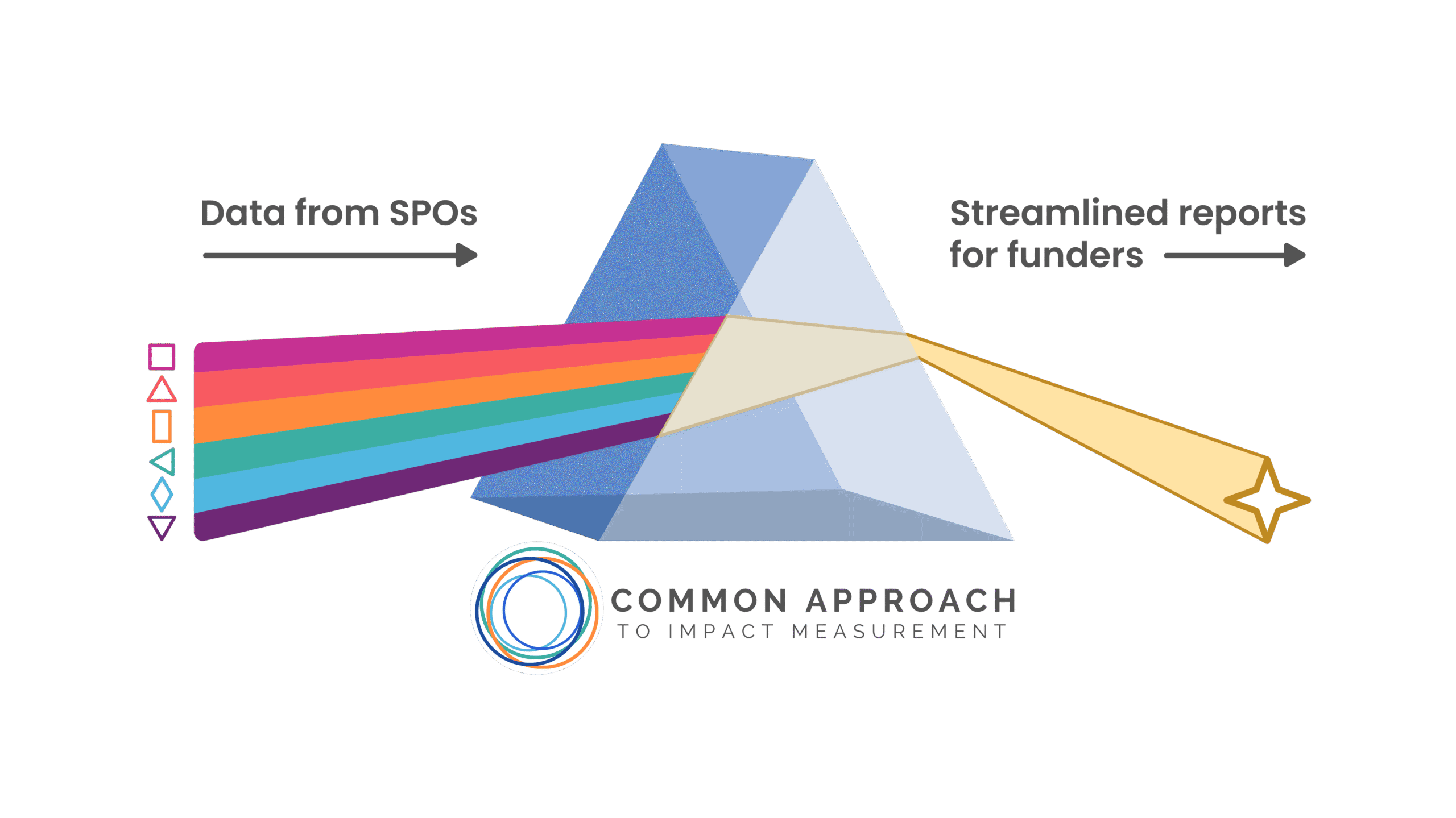
Using technology, Common Approach is making it possible for everyone to get what they need from impact measurement with less effort. At the same time, the overall quality of the data being collected will improve and the burden of collecting it will be reduced.

PrismOverview_Final_WithWdmk-scaled

Changing the system

Common Approach standards fundamentally change the traditional “win-lose” situation of impact measurement, where funder or investor data needs often turn reporting into a burdensome, box-ticking exercise for social purpose organizations. Instead, we are creating a “win-win” system by developing standards that enable easier, more flexible sharing of data.

This ensures both funders and the social purpose organizations they support can have impact measures well-aligned to their individual strategies and goals.